Quick answer: A cornucopia, literally “horn of plenty” from the Latin cornu and copiae, is a curved, overflowing horn-shaped symbol of abundance that traces back roughly 3,000 years to Greek mythology. Today it’s most closely associated with Thanksgiving, where it appears as a decorative centerpiece and as inspiration for harvest-themed gift baskets built around the same idea of generous abundance.
The cornucopia is one of those symbols everyone recognizes instantly at Thanksgiving, a curved horn spilling over with fruit, vegetables, and grain, without most people knowing exactly where it came from or what it actually means. After more than twenty years hand-assembling gift baskets in Orange Park, Florida, we’ve built plenty of harvest and Thanksgiving-themed baskets inspired by this exact image. This guide covers what a cornucopia actually is, the history and symbolism behind it, how the imagery shows up in modern Thanksgiving gift baskets, basket ideas built around the theme, and how to style one for your own table.
What A Cornucopia Actually Is, And Where It Comes From
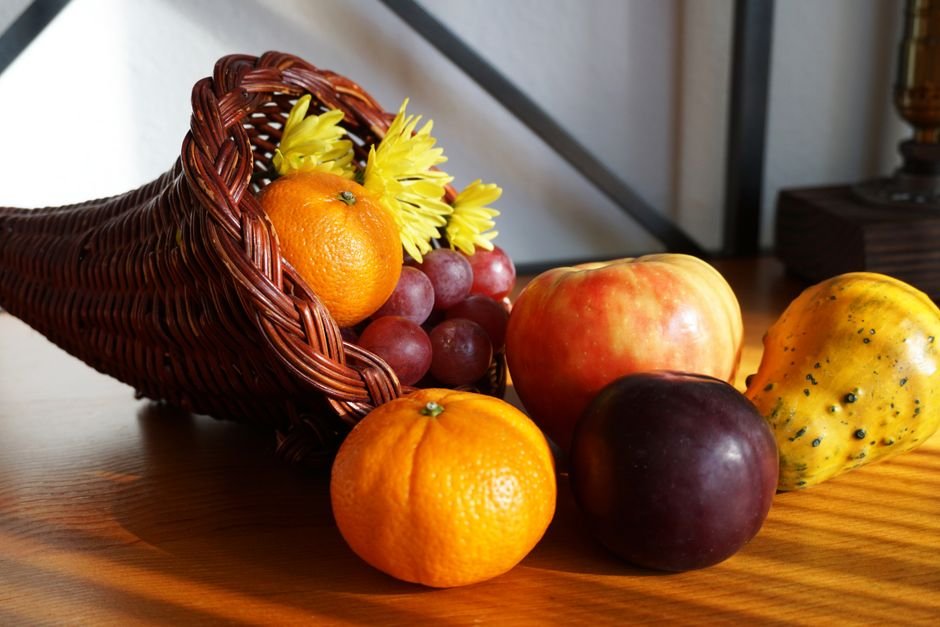
The word cornucopia combines two Latin roots, cornu meaning “horn” and copiae meaning “abundance,” giving us the literal translation “horn of plenty.” Physically, it describes a curved, hollow horn shape, traditionally overflowing with fruit, vegetables, grain, and other harvest bounty, spilling out as if there’s simply too much abundance to contain. That physical description alone explains why the image has remained so recognizable across thousands of years, since the shape itself tells the story of overflowing generosity without needing any further explanation.
The image traces back roughly 3,000 years to Greek mythology. In the most widely told version, the god Zeus was nursed as an infant by a goat named Amalthea, and during play he accidentally broke off one of her horns. As an act of gratitude, he blessed the broken horn with the power to provide endless abundance, food and drink for whoever possessed it, and later placed Amalthea among the stars as the constellation Capricorn.
From that mythological origin, the image spread widely across ancient art and culture, eventually becoming a general symbol of abundance rather than a reference to that one specific myth.
A less common but related version of the myth ties the horn to Achelous, a river god who lost one of his horns in a wrestling match with Hercules, after which it was said to have been filled with fruit and flowers and given to the goddess of abundance. Both versions point to the same underlying idea, a broken or given horn transformed into an endless source of nourishment.
The History And Symbolism Behind It
Roman mythology adopted the cornucopia enthusiastically, depicting it in the hands of deities like Ceres, the goddess of agriculture, and Fortuna, the goddess of fortune. In Roman art, the symbol represented plentiful harvests, prosperity, and good luck, themes that made it a natural fit for imagery tied to agricultural success and general good fortune, particularly in a civilization whose stability depended heavily on reliable harvests.
The symbol carried forward through the centuries, appearing in Renaissance paintings, medieval artwork, and eventually on civic seals and emblems in various countries, including several in Latin America, where it continued to represent abundance and prosperity on a national scale. Its meaning stayed remarkably consistent across all of these contexts, generosity, nourishment, and plenty, which is part of why it’s remained recognizable for thousands of years.
At its core, the cornucopia stands for the idea of sharing abundance with others rather than hoarding it, food and natural nourishment freely given rather than kept scarce. That theme of generosity is exactly why the symbol found such a natural home in an American holiday built around gratitude and gathering.
The symbol also carries a quieter meaning worth noting, abundance that comes without visible limits or a container’s rigid edge. Unlike a bowl or basket with a defined boundary, a cornucopia’s open, spilling shape suggests generosity that overflows rather than abundance that’s simply been measured out and contained.
How Cornucopias Show Up In Thanksgiving Gift Baskets Today
The cornucopia became linked to Thanksgiving specifically because the two share the same underlying themes, harvest, gratitude, and abundance, which made the ancient symbol a natural visual shorthand for the holiday. Today, that connection shows up in gift baskets designed around the same idea, an overflowing arrangement of seasonal fruit, gourmet treats, and harvest-themed items presented with the same “abundance spilling out” visual language as the original symbol.
A Thanksgiving gift basket inspired by cornucopia imagery doesn’t need to literally include a horn-shaped container to capture the spirit, though some decorative baskets do lean into that shape directly. More often, the connection comes through in the presentation itself, a generously overflowing arrangement of seasonal produce, nuts, and gourmet items that visually echoes the same sense of plentiful abundance the symbol has represented for thousands of years.
Our Gift Basket Ideas By Occasion guide has more formats worth considering if you’re building a Thanksgiving gift around this theme or a related harvest concept.
A cornucopia also appears frequently in classroom and community Thanksgiving decor beyond the dinner table itself, which is often where many people first encounter the symbol as children, long before learning the mythology behind it.
Even the color palette tends to echo the symbol directly, deep oranges, reds, and browns pulled from the traditional cornucopia’s harvest imagery, showing up in ribbon choices, packaging, and the overall visual presentation of a Thanksgiving-themed gift long after anyone consciously thinks about the ancient myth behind it.
Cornucopia-Themed Basket Ideas Worth Trying
A fruit and nut harvest basket, apples, pears, seasonal fruit paired with mixed nuts, captures the cornucopia’s original imagery most directly, since fruit and grain were the traditional contents of the symbol itself. A gourmet Thanksgiving basket, artisan crackers, cheese, seasonal preserves, translates the same abundance theme into a more indulgent, food-focused gift.
For a decorative option, a basket that includes an actual small cornucopia-shaped centerpiece alongside gourmet treats works well as both a gift and a table decoration in one. A warm beverage themed basket, apple cider, mulled wine ingredients, spiced tea, fits the autumn harvest mood the symbol represents just as naturally as a food-focused option.
A host or hostess gift built around this theme tends to be especially well received, since it doubles as both a genuine gesture of thanks and a decoration the host can incorporate directly into their own Thanksgiving table, rather than something that has to be set aside until after the gathering.
How To Style One For Your Own Table
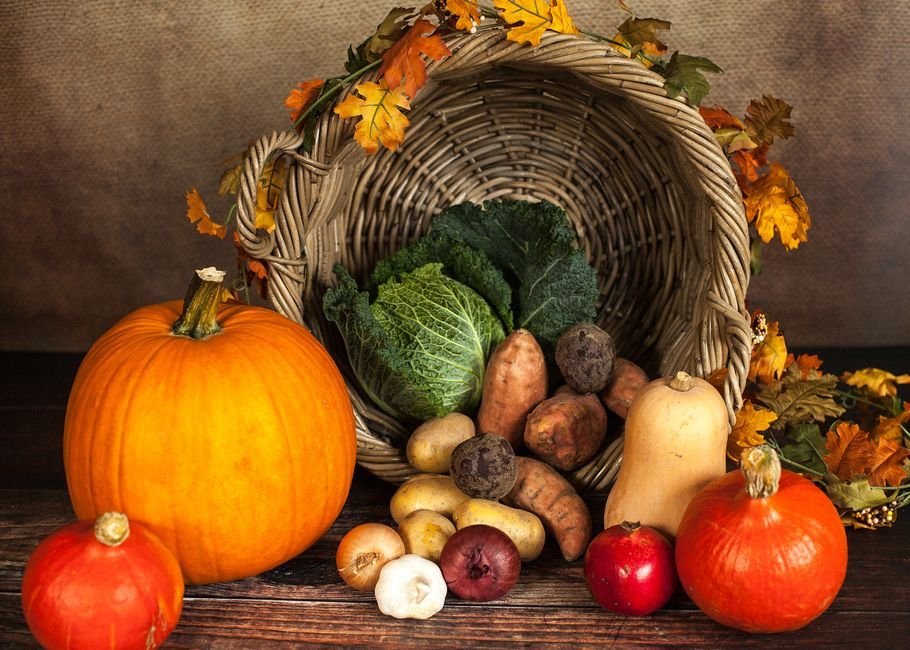
If you’re using an actual cornucopia as a Thanksgiving table centerpiece, fill it generously with a mix of textures and colors, gourds, apples, pears, dried corn, and seasonal greenery, letting some items spill slightly out of the opening for that classic “overflowing” visual effect. Varying the heights and colors of what you include keeps the arrangement visually interesting rather than flat.
Positioning matters too, a cornucopia centerpiece tends to work best as the visual anchor of the table, so keeping other decorations relatively simple around it lets the piece do the visual work it’s meant to do. A few candles or a simple runner alongside it usually round out the table without competing with the centerpiece itself.
If a fresh produce arrangement won’t last through the full stretch of the holiday season, some of the filling can be swapped for artificial gourds and dried elements without losing the visual effect, which lets the centerpiece hold up for weeks of use rather than a single day’s gathering.
Pairing Cornucopia Imagery With A Thanksgiving Gift
If you’re sending a Thanksgiving gift to someone hosting a gathering, leaning into the cornucopia’s visual language, warm autumn colors, a generously overflowing arrangement, even a small decorative horn-shaped element, helps the gift double as something that fits directly into their existing table setup rather than needing to be set aside separately. Our Gift Basket Ideas By Occasion guide covers more general Thanksgiving-adjacent formats if you want to build out a gift beyond the cornucopia theme specifically.
For anyone shipping a Thanksgiving gift rather than delivering it in person, it’s worth choosing sturdier seasonal items, gourds, nuts, shelf-stable preserves, over delicate fresh produce that may not hold up as well in transit, while still keeping the visual abundance the symbol is known for through variety and generous quantity rather than fragile perishables alone.
Basketique has spent over twenty years hand-assembling gift baskets out of Orange Park, Florida, and the cornucopia’s spirit of generous abundance is something we think about every Thanksgiving season. Read more about our roots on our About Us page.
Browse Basketique’s cornucopia-themed Thanksgiving gift basket picks and bring a bit of that same overflowing abundance to your own gifting this season.
What does the word cornucopia actually mean?
Cornucopia comes from the Latin words cornu, meaning horn, and copiae, meaning abundance, translating literally to “horn of plenty.” It describes both the physical horn shape and the broader idea of overflowing abundance it represents.
Why is the cornucopia associated with Thanksgiving specifically?
The symbol became linked to Thanksgiving because both share the same core themes, harvest, gratitude, and abundance, making the ancient image a natural visual shorthand for the holiday. It’s been part of American Thanksgiving imagery for a very long time as a result.
Where does the cornucopia symbol originally come from?
It traces back roughly 3,000 years to Greek mythology, most commonly tied to the story of Zeus and the goat Amalthea, whose broken horn was blessed with the power to provide endless abundance. Roman mythology later adopted the symbol widely as well.
Do I need an actual horn-shaped basket for a cornucopia-themed Thanksgiving gift?
Not necessarily, many cornucopia-themed gift baskets capture the spirit through generous, overflowing presentation rather than a literal horn shape. That said, some decorative options do use an actual cornucopia-shaped container if you want the imagery more directly.
What’s a good cornucopia-inspired gift for someone hosting Thanksgiving?
A gourmet harvest basket, fruit, nuts, artisan crackers and cheese, makes a fitting hostess gift that echoes the cornucopia’s traditional imagery. Basketique’s picks lean into that same sense of generous, seasonal abundance.
Leave a Reply