Quick answer: Red licorice is a chewy, fruit-flavored candy, usually strawberry or cherry, made in twists, ropes, or bites. Despite the name, many red licorice candies contain no licorice root at all, which is what gives black licorice its distinctive flavor. Most are made with wheat flour and sugar, so check the label for ingredients and allergens.
Red licorice is one of those candies almost everyone remembers from childhood. Maybe it was a twist from the concession stand at the movies, a rope you tied in knots on a road trip, or a handful from the bulk bin at the corner store. Yet a lot of people aren’t quite sure what red licorice actually is, why it’s called licorice at all, or how it’s different from the black kind that people either love or can’t stand. If you’ve wondered, you’re not alone. After decades of filling candy baskets in Orange Park, Florida, we’ve answered this question more than a few times. This plain-English guide covers what red licorice is, red versus black, popular styles, how to pick a good one, and gifting it in a candy basket.
What Red Licorice Actually Is
Red licorice is a chewy candy usually made from a dough of wheat flour, sugar or corn syrup, flavorings, and color. The dough is cooked, then pushed through a shaped opening, a process called extrusion, to form twists, ropes, tubes, or bites. The result is a soft, slightly springy candy that’s fun to pull, twist, and nibble.
The flavor is fruity rather than herbal. Strawberry and cherry are the most common, but raspberry, watermelon, and mixed-berry versions are easy to find, too. The red color comes from food coloring, and the sweetness is bright and familiar, similar to fruit-flavored gummy candy.
Here’s the surprising part. Many red licorice candies don’t contain any licorice root at all. True licorice flavor comes from the root of the licorice plant, which has a strong, sweet, slightly anise-like taste. Red licorice borrowed the name because it shares the same chewy texture and shape, not the same flavor.
That said, recipes vary by brand and product, and some candies may include different ingredients. If you want to know exactly what’s inside, the ingredient label is the best source. It’s also where you’ll find allergen information, which matters for gift-giving.
Red Licorice Versus Black Licorice
The biggest difference is flavor. Black licorice gets its taste from licorice root extract, and sometimes from anise oil, which gives it a bold, earthy, slightly medicinal sweetness. It’s one of the most divisive candy flavors around, with devoted fans and equally devoted skeptics.
Red licorice, on the other hand, is fruity and mild. It’s easy to like and rarely surprises anyone. That’s why red licorice tends to be the safer choice for kids, parties, and gifts when you don’t know the recipient’s taste.
The textures can be similar, since both are often extruded into twists or ropes. Some black licorice is denser and chewier, while some red licorice is softer and more pliable. Traditional European black licorice can also be salty, especially in Scandinavian and Dutch styles, which is a very different experience from American fruit-flavored twists.
Color is another clue, but not a foolproof one. Black licorice is typically dark because of the licorice extract and added coloring, while red licorice gets its color from food dyes. If you’re unsure which kind you have, check the flavor and ingredient list on the package.
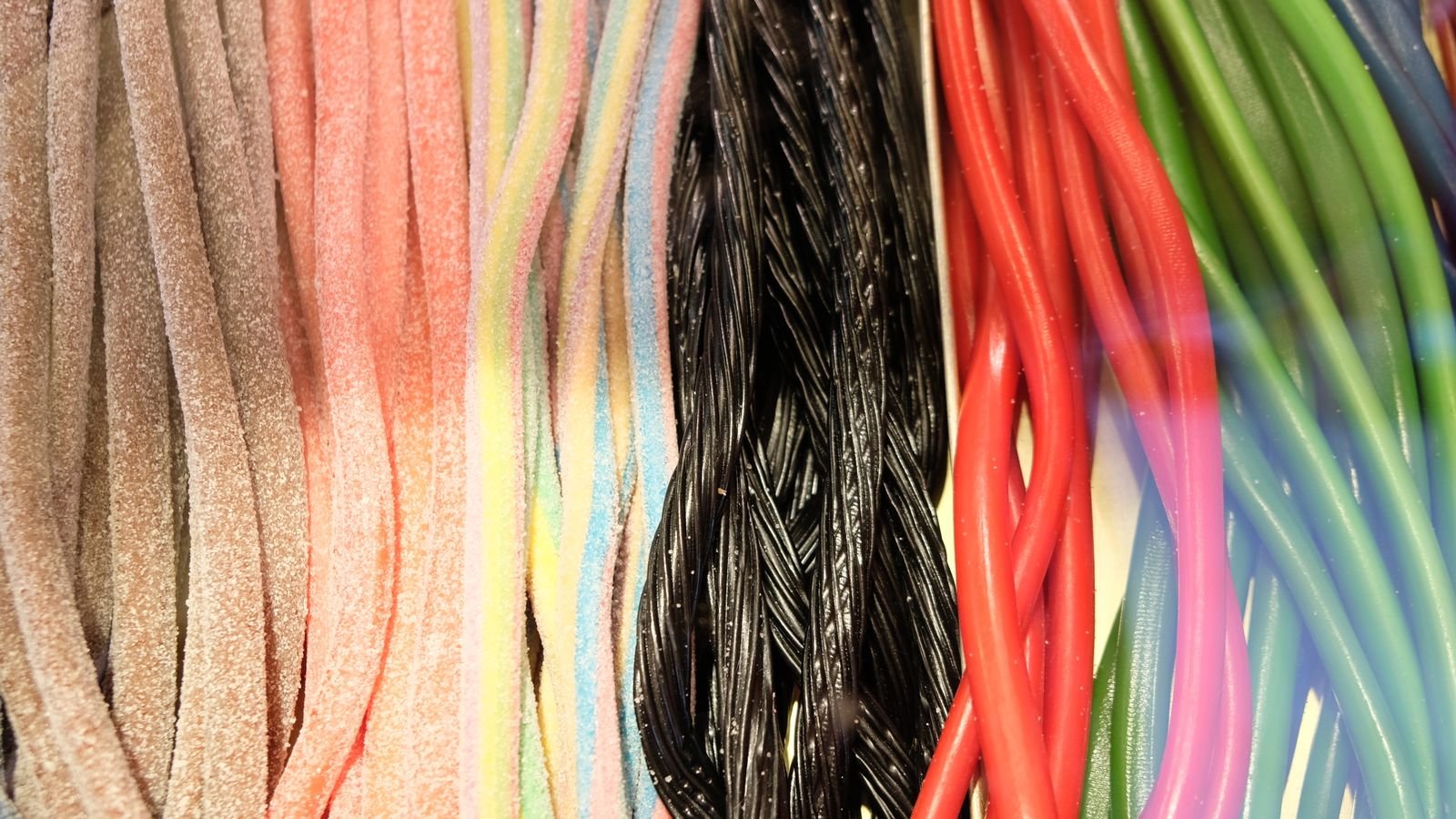
Popular Styles And Flavors
Twists are the classic style. These spiraled sticks are what most people picture when they hear “red licorice,” and they’re often sold in large bags or tubs. Some twists are solid, while others have a hollow center, which gives them a slightly lighter chew. Twists are easy to portion, which is why they show up so often at movie theaters, ballparks, and school parties.
Ropes and laces are long, thin strands that can be pulled apart, braided, or tied. They’re popular for crafts, cake decorating, and playful snacking. Pull-apart styles, where several strands are joined together, are a favorite with kids who like to peel them one by one.
Bites and nibs are small pieces, sometimes filled with a fruit-flavored center. They’re easy to share and work well in candy dishes and small treat bags. Filled licorice comes in flavors like strawberry, cherry, and sour apple.
There’s also soft licorice, sometimes called Australian-style, which is thicker and more tender than standard twists. It’s known for its soft, almost cake-like chew. Some brands also make gluten-free or naturally colored versions, which are worth seeking out for friends with dietary needs.
How To Pick Good Red Licorice
Freshness matters most. Red licorice should feel soft and slightly springy, not hard or brittle. If you’re buying from a bulk bin, choose a spot with steady turnover. If you’re buying packaged licorice, check the best-by date and look for a sealed, resealable bag.
Think about flavor preferences. Strawberry and cherry are crowd-pleasers, while raspberry or mixed fruit adds variety. If you’re building a candy basket, including two or three flavors gives the recipient something to compare.
Consider texture. Some people love the firmer chew of classic twists, while others prefer soft licorice or filled bites. If you know the recipient’s preference, choose accordingly. If not, a mix of styles is a fun option.
Finally, read the label. Many red licorice candies contain wheat, and some contain other allergens or ingredients certain people avoid. Checking the ingredient list helps you choose a candy that works for the person you’re shopping for.
Once you open a bag, storage makes a real difference. Red licorice dries out and stiffens when it’s exposed to air, so reseal the bag tightly or move the candy to an airtight container. Keep it in a cool, dry place away from direct sunlight. If you’re adding licorice to a gift basket, wait until close to delivery to unwrap any bulk candy, and tuck it into cellophane bags tied with ribbon so it stays soft until the recipient digs in.
Gifting Red Licorice In A Candy Basket
Red licorice adds color, height, and nostalgia to a candy basket. Long twists or ropes standing upright in a jar or tucked in the back of a basket create a fun focal point. Pair them with other classic candies, like taffy, candy sticks, and gummies, for a retro theme. Our old time candy guide has more nostalgic ideas.
A movie night basket is a natural fit. Combine red licorice with popcorn, boxed candy, and a drink for a cozy night in. Our movie night gift basket guide covers this theme in more detail.
For a casual treat gift, add red licorice to a goodie basket. Its bright color and fun shape make it a cheerful addition, and our goodie basket guide explains how to mix sweet and salty treats.
If you’re building a broader candy assortment, our candy basket guide covers how to balance flavors and textures. For something with a little spice instead, our ginger candy guide explores a very different kind of sweet.

Choosing Red Licorice For Different Dietary Needs
Most red licorice guides skip dietary needs, but they matter when you’re giving candy as a gift. Since many red licorice candies are made with wheat flour, they’re not suitable for people avoiding gluten. Some brands make gluten-free versions with alternative starches, so look for clear labeling if that’s a concern.
People following vegetarian or vegan diets may also want to check labels. Some candies use ingredients like gelatin, beeswax, or certain colorings that they avoid. Reading the label, or checking with the manufacturer, is the best way to be sure.
Some people prefer candies without artificial dyes, and a few brands make red licorice with fruit- or vegetable-based colors. When in doubt, include the package or a list of ingredients with your gift, so the recipient can decide for themselves.
Kids’ parties deserve a quick thought, too. If you’re handing out licorice at a classroom celebration or birthday party, ask the host about allergies and any school food rules first. Individually wrapped twists or small sealed packs are easier for parents to check than loose candy from a bulk bin, and they keep things tidy when little hands are involved.
Building a candy gift that brings back sweet memories? Basketique has decades of hands-on candy basket experience, and our guides help you find the right treats from trusted retailers.
Browse our candy basket guide or explore our gift baskets section for more ideas.
Is red licorice actually licorice?
Not usually. Many red licorice candies contain no licorice root and are flavored with fruit like strawberry or cherry instead. They’re called licorice because of their chewy texture and shape.
What is red licorice made of?
Most red licorice is made from wheat flour, sugar or corn syrup, flavorings, and color. Recipes vary by brand, so check the ingredient label for details.
Is red licorice gluten-free?
Many red licorice candies contain wheat and are not gluten-free. Some brands offer gluten-free versions, so look for clear labeling.
Why do some people dislike black licorice but like red?
Black licorice has a strong, herbal flavor from licorice root, which some people find too intense. Red licorice is fruity and mild, so it appeals to more people.
Is red licorice good for a candy gift basket?
Yes, it adds color, height, and nostalgia. Basketique often suggests pairing it with other classic candies for a fun retro basket.
Leave a Reply