Quick answer: Italian sparkling wines range from light, fruity Prosecco and sweet, aromatic Asti to elegant Franciacorta and fizzy red Lambrusco. For gifting, Prosecco is a crowd-pleaser, Asti suits people who like sweeter wines, and Franciacorta feels special for celebrations. Pair a bottle with snacks in a basket, and order from a retailer that can legally ship alcohol to the recipient’s state.
When people think of bubbly, champagne usually comes to mind first. But Italy produces a wonderful range of sparkling wines, and many of them are approachable, festive, and easy to love. If you’re looking for a gift for a wine lover, a hostess, or someone celebrating a promotion, engagement, or new home, an Italian sparkling wine can be a lovely choice. It feels celebratory without being fussy. In our decades of putting celebration baskets together in Orange Park, Florida, bubbly was always a favorite addition for adults marking a special moment. This guide explains what counts as Italian sparkling, the main styles, sweet versus dry, snack pairings, and how to gift a bottle with a basket. Please enjoy responsibly, and only give alcohol to adults 21 and older.
What Counts As Italian Sparkling
Italian sparkling wine is simply wine made in Italy with bubbles. In Italian, fully sparkling wine is called “spumante,” and lightly sparkling wine is called “frizzante.” You’ll see both words on labels, and they give you a quick clue about how bubbly the wine will be.
Italy makes sparkling wine in many regions, from the hills of Veneto to Piedmont, Lombardy, Emilia-Romagna, and Trentino. Each area uses different grapes and methods, which is why Italian sparkling wines taste so varied. Some are light and fruity, some are sweet and floral, and others are crisp and complex.
Two main production methods are used. In the tank method, also called the Charmat method, the second fermentation happens in large steel tanks, which tends to keep fresh, fruity flavors. In the traditional method, the same method used for champagne, the second fermentation happens in each individual bottle, often creating finer bubbles and more toasty, layered flavors.
You’ll also see quality designations on labels, like DOC and DOCG. These indicate that the wine comes from a specific region and follows that region’s rules. They’re helpful for understanding where a wine comes from, though personal taste is always the best guide.
Prosecco, Asti, Franciacorta, And Lambrusco
Prosecco is the most famous Italian sparkling wine. It’s made mainly from the Glera grape in northeastern Italy, usually with the tank method. Prosecco tends to be light, fresh, and fruity, with notes of green apple, pear, and white flowers. It’s a popular choice for brunches, toasts, and mimosas.
Asti, from the Piedmont region, is made from Moscato Bianco grapes and is known for being sweet, aromatic, and fruity, with notes of peach, apricot, and honeysuckle. Its lightly sparkling cousin, Moscato d’Asti, is gentler in fizz. Both are often enjoyed with dessert or by people who prefer sweeter wines.
Franciacorta, from Lombardy, is made using the traditional method and is often compared to champagne. It tends to be elegant and complex, with fine bubbles and flavors that can include citrus, toasted bread, and nuts. It’s a lovely choice for a special celebration.
Lambrusco, from Emilia-Romagna, is a sparkling red wine that surprises many people. It can range from dry to sweet, and it’s often fruity with notes of cherry and berry. Lambrusco is traditionally enjoyed with hearty foods and makes a fun, unexpected gift for adventurous wine lovers.
Beyond these four, Italy has other sparkling wines worth knowing. Trento DOC, from the mountainous Trentino region, is made with the traditional method and is often crisp and refined. Alta Langa, from Piedmont, is another traditional-method sparkling wine. These are less common in grocery stores, but a good wine shop may carry them, and they make a thoughtful pick for a wine lover who has already tried Prosecco.

Sweet Versus Dry Styles
Sweetness is one of the most important things to consider when choosing Italian sparkling wine as a gift. Labels use terms that describe how dry or sweet the wine is, and some of them are confusing. “Brut” usually means dry, while “Extra Dry” is actually a little sweeter than Brut, despite the name.
“Dry” on a sparkling wine label, confusingly, often means even sweeter than Extra Dry. Terms like “Demi-Sec” or “Dolce” indicate noticeably sweet wines. Asti and Moscato d’Asti are known for their sweetness, while many Prosecco and Franciacorta bottles are drier styles.
If you know the recipient’s taste, use it as your guide. People who enjoy crisp, dry wines may prefer a Brut Prosecco or Franciacorta. Those who like fruity, sweeter drinks might love an Asti or Moscato d’Asti. If you’re unsure, an Extra Dry Prosecco is often a crowd-pleaser with gentle sweetness.
Remember that taste is personal, and there’s no single “best” style. Rather than chasing a particular bottle, choose a style that suits the person, and ask a knowledgeable retailer for guidance. Always check the label for details, including alcohol content.
Pairing Italian Sparkling With Snacks
Italian sparkling wines are wonderfully food-friendly. Prosecco pairs nicely with light appetizers like bruschetta, fresh mozzarella, prosciutto-wrapped melon, and salty snacks like popcorn or potato chips. Its fruity freshness balances salt and fat beautifully.
Asti and Moscato d’Asti shine with desserts, fruit tarts, biscotti, and fresh berries. Their sweetness complements rather than competes with sugary treats. They also pair nicely with mild cheeses and fruit platters, and our cheese basket guide has pairing ideas.
Franciacorta works with richer foods like aged cheeses, roasted nuts, seafood, and fried appetizers. Its fine bubbles and complexity make it a great match for a celebratory spread. Lambrusco loves cured meats, pizza, and hearty pasta dishes, and pairs well with a charcuterie gift basket.
For a non-alcoholic guest, sparkling cider, sparkling grape juice, or an alcohol-free sparkling wine can join the toast. Including a non-alcoholic option in a celebration basket is a thoughtful way to make sure everyone feels welcome.
Gifting Italian Sparkling With A Basket
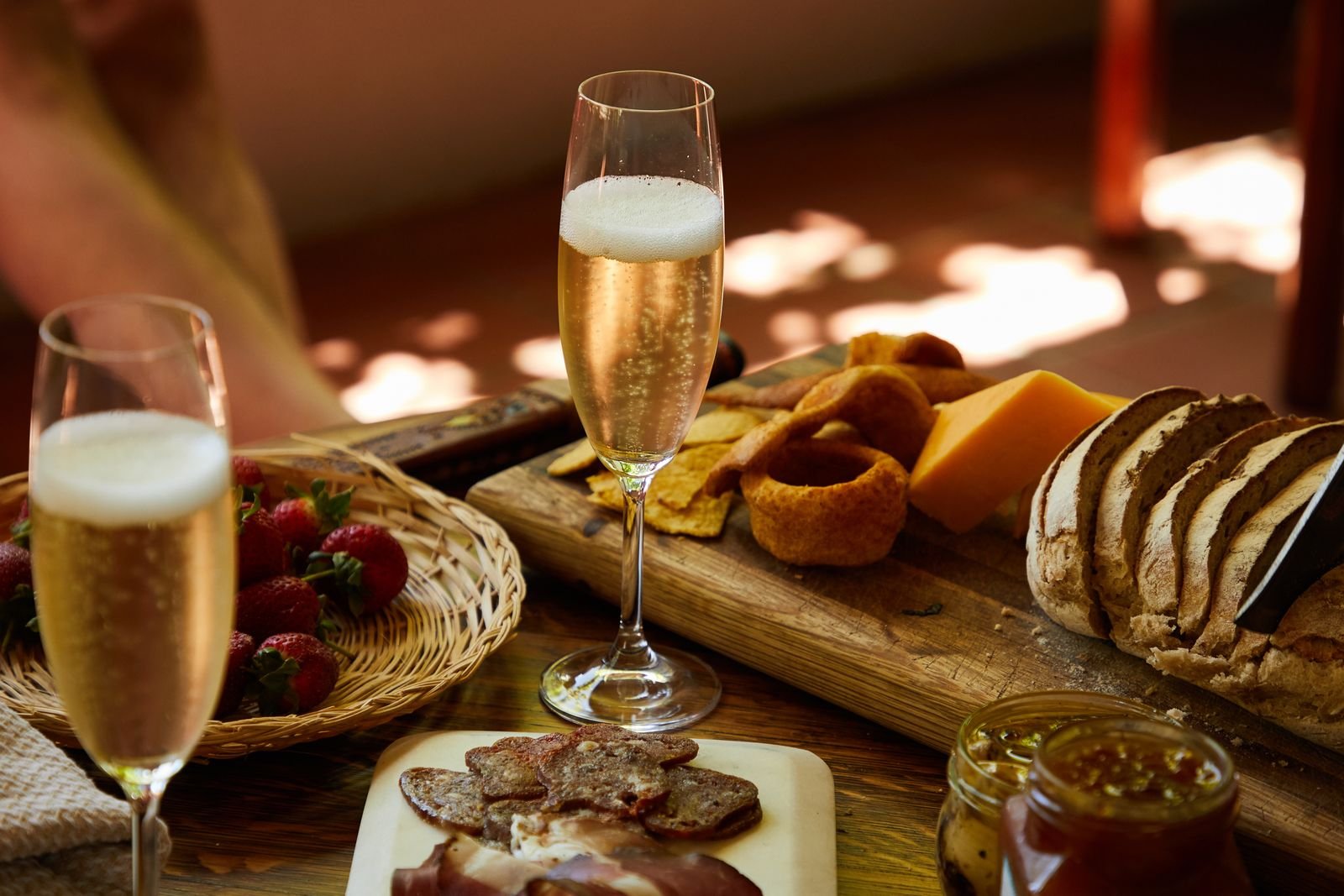
A bottle of Italian sparkling wine becomes a complete gift when paired with snacks. An Italian-themed basket might include a bottle of Prosecco, breadsticks, olives, a hard cheese like parmesan, biscotti, and dark chocolate. A brunch basket could pair Prosecco with orange juice for mimosas, pastries, and jam.
Alcohol shipping rules matter here. Alcohol shipping laws vary by state, an adult 21 or older must sign and show ID at delivery, and the retailer handles eligibility and shipping restrictions. Basketique doesn’t ship alcohol itself, so choose a licensed retailer that can legally deliver to the recipient’s address.
For related ideas, our champagne gift baskets guide covers French bubbly, and our wine gifts guide covers still wines and broader wine gifting. Always keep your gift in the spirit of celebration and responsible enjoyment.
Presentation adds to the fun. A bottle nestled in a wooden crate or a lined basket, surrounded by snacks and wrapped with a ribbon, looks festive and travels well when hand-delivered. Add a pair of flutes or a bottle stopper for a practical touch, and include a card that names the occasion, whether it’s a promotion, an anniversary, or a new home. If you’re delivering it yourself, keep the bottle out of direct sun and heat on the way.
Reading An Italian Sparkling Wine Label
Many guides skip the label, but it’s one of the most useful tools for gifting. Look first for the style name, like Prosecco, Asti, Franciacorta, or Lambrusco. Then look for “spumante” or “frizzante” to understand the level of fizz.
Next, check the sweetness term, like Brut, Extra Dry, Dry, or Dolce, keeping in mind that Extra Dry and Dry are sweeter than Brut. You may also see “Superiore” on some Prosecco labels, or a region name like Conegliano Valdobbiadene, which points to a specific hillside area.
Finally, note the alcohol content and serving suggestions printed on the bottle. If you’re unsure, a good wine shop can help you choose. Understanding a few label basics lets you pick a bottle that suits the person you’re celebrating.
One last tip: think about when the bottle will be opened. Most Prosecco and Asti are made to be enjoyed young and fresh, so they’re best opened fairly soon rather than saved for years. Mentioning that on your card, perhaps with a suggestion to chill it for the next happy occasion, helps the recipient enjoy the gift at its best.
Planning a celebration gift? Basketique has decades of hands-on gift basket experience, and our guides can help you find a festive basket from a trusted, licensed retailer.
Browse our champagne gift baskets guide or explore Gift Basket Ideas By Occasion for more celebration ideas.
What is the difference between Prosecco and champagne?
Prosecco comes from northeastern Italy and is usually made with the tank method, giving it a light, fruity style. Champagne comes from France and is made with the traditional method, often creating more toasty, complex flavors.
Is Asti sweet?
Yes, Asti is known for being sweet and aromatic, with fruity, floral notes. Moscato d’Asti is similar but has gentler bubbles.
Can I ship Italian sparkling wine as a gift?
It depends on the state. Alcohol shipping laws vary, and an adult 21 or older must sign at delivery. Choose a licensed retailer that handles eligibility and restrictions.
What snacks go with Prosecco?
Prosecco pairs well with salty snacks, fresh cheeses, prosciutto, and light appetizers. Its fruity freshness balances salty and fatty foods.
What’s a good Italian sparkling wine for someone who doesn’t like dry wine?
Asti or Moscato d’Asti are often good choices for people who prefer sweeter wines. Basketique suggests asking a knowledgeable retailer for recommendations based on their taste.
Leave a Reply